

The End of Financial Slavery: Why Decentralized Ownership Matters More Than Ever
For generations, most people have followed the same financial path. Work hard. Save money. Pay taxes. Pay debt. Trust institutions. Hope for retirement. Yet despite technological progress, productivity gains, and unprecedented economic growth, millions of people around the world feel increasingly disconnected from the wealth being created.
Housing becomes more expensive. Inflation reduces purchasing power. Assets become harder to acquire. The gap between those who own productive systems and those who merely participate in them continues to widen. The uncomfortable truth is that modern economies often reward ownership far more than labor.
Those who own banks benefit from banking activity. Those who own technology platforms benefit from user activity. Those who own infrastructure benefit from economic growth. Meanwhile, the majority of people participate in systems they do not own. This is not a political issue. It is a structural reality. The world’s most valuable companies are built upon networks. Social networks. Financial networks. Technology networks. Information networks.
The question is simple: Who owns those networks?
In most cases, ownership remains concentrated among founders, venture capital firms, institutional investors, and large corporations. The users create value. The owners capture value. Blockchain technology introduced a radical alternative. For the first time in history, digital networks could be owned by the communities that help build them. Bitcoin demonstrated that money could exist without a central authority. Ethereum demonstrated that programmable economic systems could operate on a decentralized foundation.
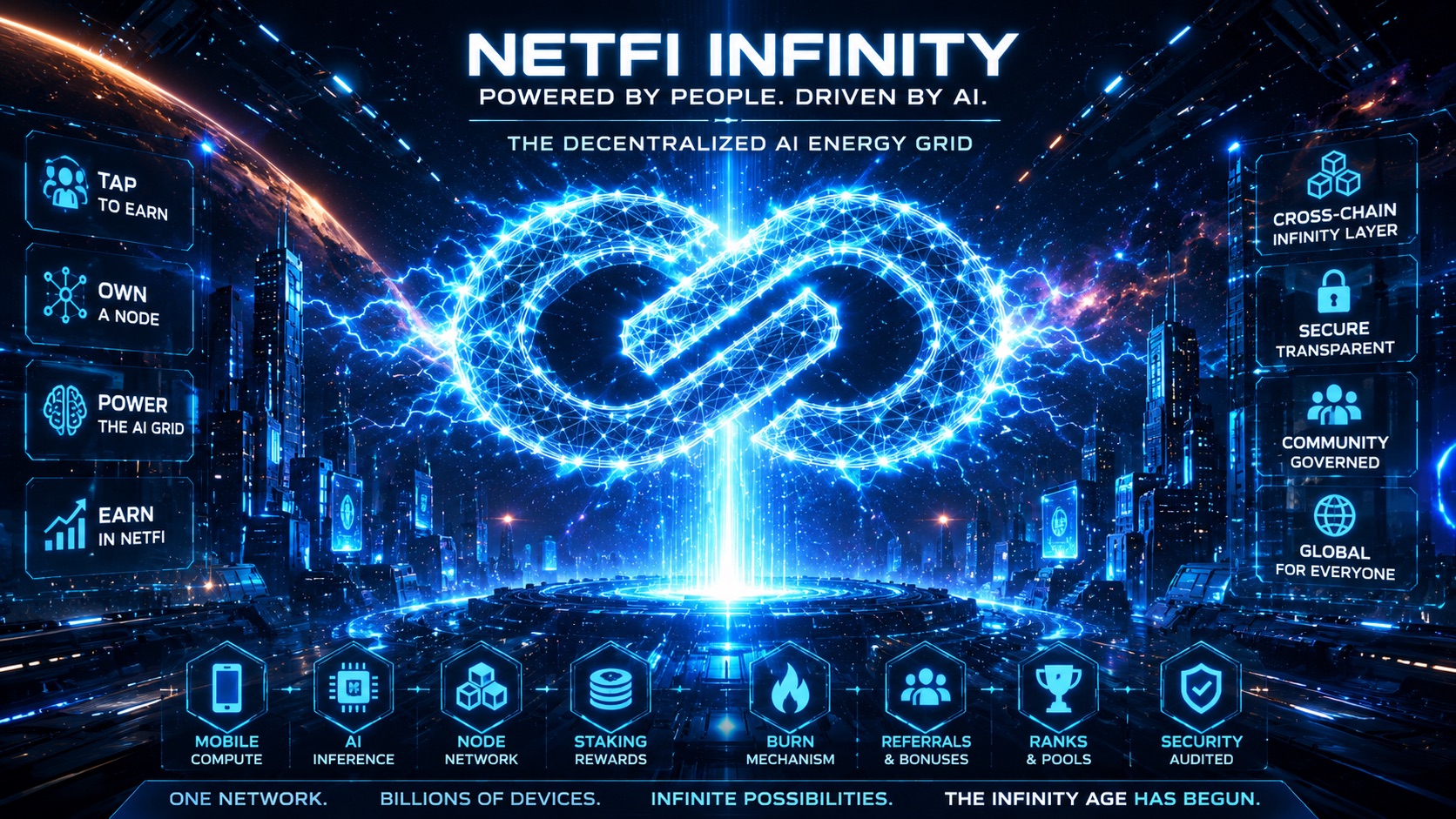
The next evolution may involve something even larger: The ownership of artificial intelligence infrastructure itself. This is the vision driving NetFi Infinity. The project is built around the belief that future technology networks should not be controlled exclusively by a small number of corporations. Instead, they should create opportunities for broader participation and ownership. The significance of this idea cannot be overstated.
Artificial intelligence is rapidly becoming one of the most valuable industries in human history. Governments are investing billions. Technology giants are investing hundreds of billions. Entire industries are restructuring around AI. If AI becomes the foundation of the next economic era, ownership of AI-related infrastructure could become one of the most important wealth-creation opportunities of the coming decades. Most people will interact with AI as consumers.
A smaller group will participate as owners. History suggests there is a profound difference between the two. The railroads created wealth. The greatest fortunes were made by those who owned them. The internet created wealth.The greatest fortunes were made by those who owned platforms and infrastructure.
Artificial intelligence may follow the same pattern. NetFi Infinity seeks to position its community on the ownership side of that equation. The ecosystem combines node ownership, staking, community participation, governance mechanisms, reward systems, and long-term infrastructure ambitions into a unified framework designed around participation rather than extraction. This matters because economic freedom is rarely created through consumption.
It is created through ownership. Ownership creates leverage. Ownership creates influence. Ownership creates long-term value. Ownership transforms individuals from customers into stakeholders.
In many ways, the emergence of decentralized technologies represents one of the most important economic shifts since the creation of the internet itself. For the first time, communities can collectively own digital infrastructure. For the first time, participation can be directly connected to economic incentives.
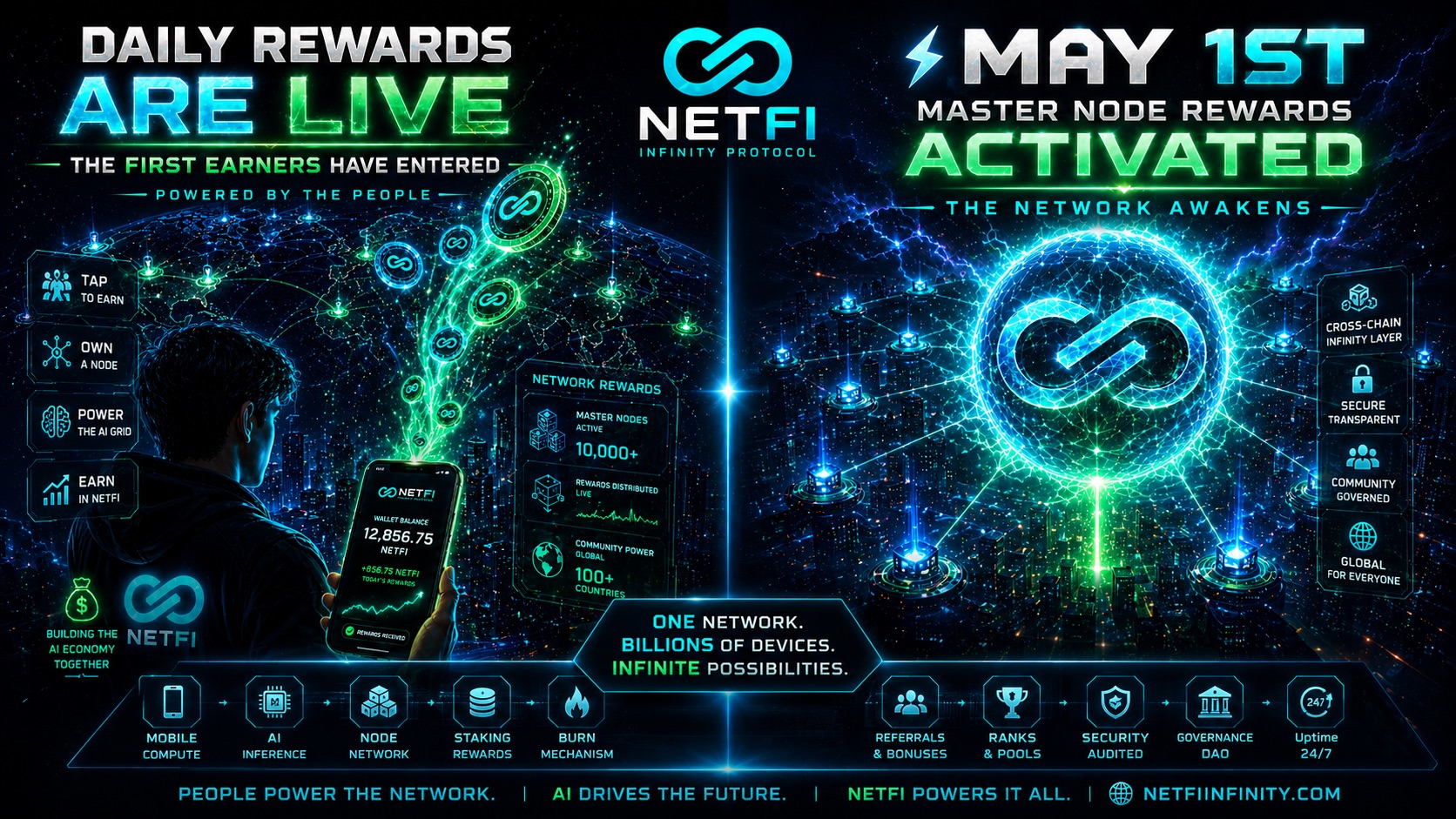
For the first time, network growth can benefit the people helping create it. NetFi’s vision extends this principle into the AI era. Imagine a future where intelligent systems are not controlled solely by centralized entities. Imagine a future where communities contribute to and benefit from decentralized AI ecosystems.
Imagine a future where technological progress creates opportunities for broader participation rather than increasing concentration. This is not simply a technical innovation. It is an economic philosophy. The future will likely belong to those who recognize the importance of ownership before the majority does.
The AI revolution is coming. The infrastructure is being built. The next generation of wealth may be created by those who position themselves within these emerging systems. The question is not whether artificial intelligence will change the world. The question is who will own the networks that power it. NetFi Infinity believes the answer should include the people.